

A design file is not a product
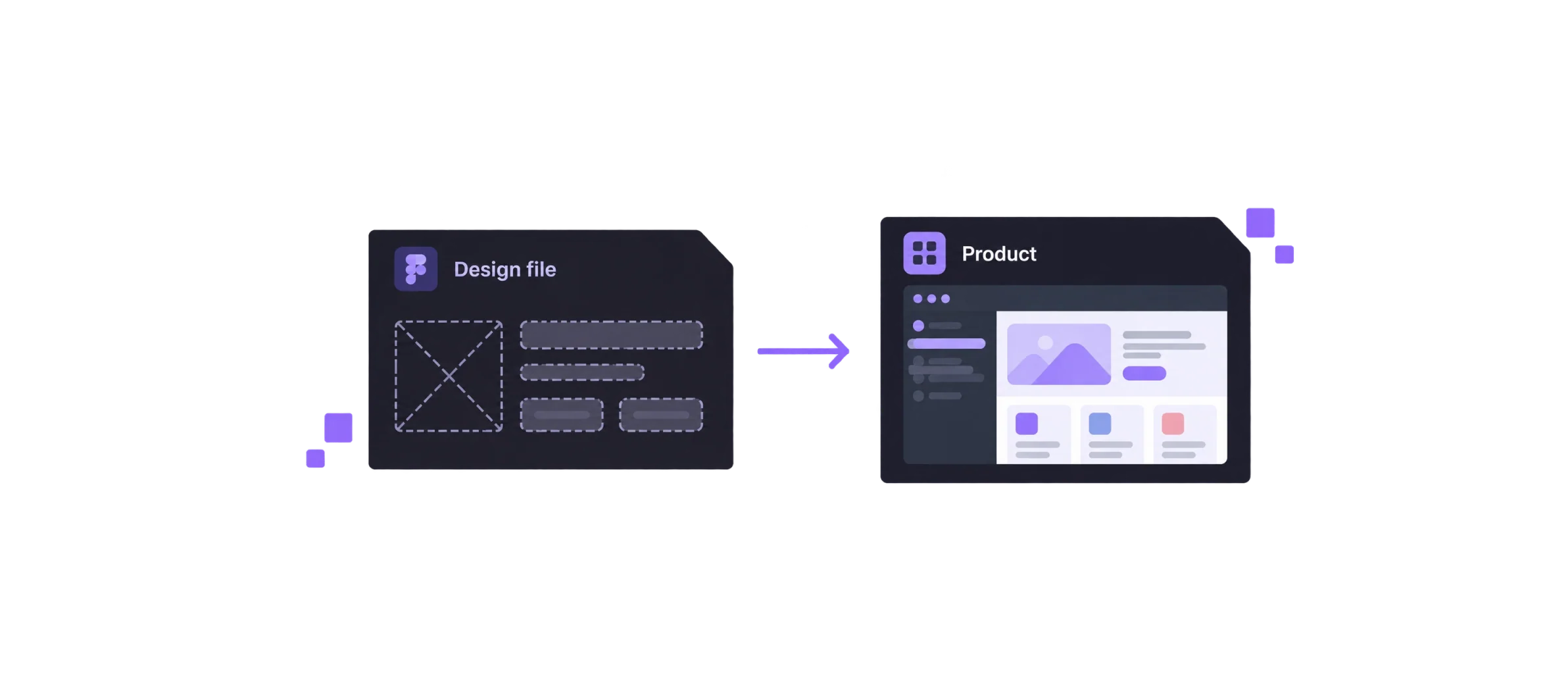
A screen can look perfect in Figma and still be a terrible experience in a browser.
The spacing is consistent. The typography is beautiful. Every button is exactly where it should be.
Then someone opens it on a smaller laptop. A headline wraps onto three lines, the navigation breaks, and the primary action disappears below the fold.
Nothing is technically wrong with the design file.
The problem is that people do not use design files. They use products.
The screens nobody designed
Most interfaces are presented in their ideal state.
The user is logged in. The content fits. The images load. Every field contains exactly the right amount of text.
Real products have other plans.
Consider the states that rarely make it into the first design presentation:
- Empty states: What happens when there are no products, messages, or search results?
- Loading states: What does the user see while information is being retrieved?
- Error states: What happens when a payment fails or an external service is unavailable?
- Long content: What happens when a title is twice as long as the example?
- Permissions: What does the interface look like when a user cannot access a particular feature?
These are not unusual edge cases. They are ordinary parts of using software.
If nobody designs them, developers still have to implement them. They just end up making design decisions without the designer.
Responsive is a behaviour, not a breakpoint
Making a desktop interface smaller is not the same as designing for mobile.
People interact differently depending on their device.
On a desktop, a complex table might be the fastest way to compare information. On a phone, the same table might need to become a set of cards with expandable details.
A hover interaction may work beautifully with a mouse and be completely inaccessible on a touchscreen.
Even the order of information can change. Something that sits comfortably in a desktop sidebar may deserve a prominent position on mobile.
Responsive design is not about preserving the same arrangement at every width.
It is about preserving the same purpose.
The handoff should be a conversation
The traditional workflow sounds simple: designers finish their screens, developers receive the files, and implementation begins.
In practice, that separation creates avoidable problems.
A designer may propose an interaction that requires significant custom development. A developer may replace a difficult element with a simpler alternative without understanding why it was designed that way.
Both decisions can be reasonable. Neither should happen in isolation.
A better handoff makes room for questions:
- Which elements are reusable components?
- How should interactions and transitions behave?
- What changes between desktop, tablet, and mobile?
- Which visual details are essential to the experience?
- Where can implementation be simplified without losing the intended result?
The goal is not to eliminate every question before development. It is to make answering them part of the process.
Quality lives in the details
A polished product is rarely the result of one spectacular design decision.
It is built from dozens of smaller ones.
The form that explains an error clearly. The button that shows something is happening. The navigation that remains predictable. The animation that adds context instead of getting in the way.
Accessibility belongs here too: readable contrast, visible keyboard focus, meaningful labels, and interactions that do not depend on a single input method.
These details are easy to overlook when reviewing static screens. They become impossible to ignore when someone actually uses the product.
Design does not end at handoff
The first implementation is not the final expression of a design.
It is the moment the design meets actual content, real devices, browser behaviour, and technical constraints.
That is why designers and developers need to stay involved through testing and refinement, not just until the files are handed over.
A beautiful mockup can help sell an idea.
A well-built interface makes that idea work.